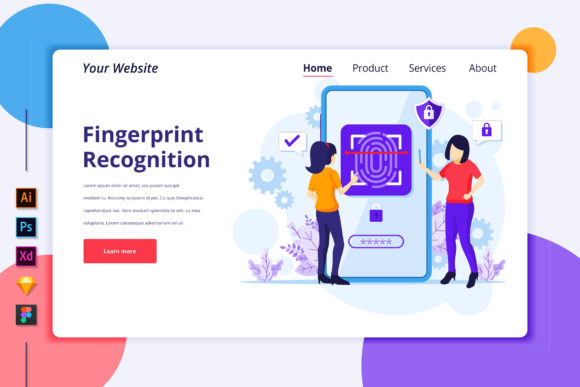
Landing Page of Fingerprint Recognition: A Modern Approach to Biometric Access Control
The Landing Page of Fingerprint Recognition is a digital design concept that showcases the power and convenience of biometric access control. It visually represents how users, particularly women, interact with their smartphones using fingerprint recognition technology. This flat vector illustration is ideal for web and mobile interfaces, offering a clean, modern aesthetic that aligns with current design trends.
What sets this landing page apart is its focus on user experience and seamless integration of biometric features. The design emphasizes simplicity, making it easy for users to understand how fingerprint recognition works and why it’s an essential feature in today’s digital world.
Understanding Fingerprint Recognition Technology
Fingerprint recognition technology uses unique patterns found on a person’s fingertips to verify identity. This method has become increasingly popular due to its accuracy, speed, and security. Unlike traditional passwords or PINs, fingerprints are difficult to replicate, making them a reliable form of authentication.
The Landing Page of Fingerprint Recognition highlights this technology by presenting a visual narrative of how users can unlock their devices with a simple touch. This approach not only educates users but also reinforces the idea that biometric access control is both secure and user-friendly.
Comparing Fingerprint Recognition with Other Authentication Methods
When evaluating authentication methods, it's important to consider the strengths and limitations of each. Traditional methods such as passwords and PINs are still widely used, but they come with their own set of challenges. Passwords can be forgotten, stolen, or guessed, while PINs are vulnerable to shoulder surfing and brute-force attacks.
In contrast, fingerprint recognition offers a more secure and convenient alternative. It eliminates the need to remember complex passwords and reduces the risk of unauthorized access. However, it’s not without its drawbacks. For instance, if a device’s fingerprint sensor is damaged or malfunctioning, users may be locked out until the issue is resolved.
The Landing Page of Fingerprint Recognition provides a clear comparison between these methods, helping users make informed decisions about which authentication option suits their needs best.
Key Features of the Landing Page Design
The Landing Page of Fingerprint Recognition is designed with several key features that enhance its usability and appeal. These include:
- Vector-based Elements: All elements in the design are 100% vector-based, allowing for easy resizing and editing without loss of quality.
- Editable Text and Colors: Users can customize text and color schemes to match their brand or project requirements.
- Compatibility: The template is compatible with Adobe Illustrator, Photoshop, Adobe XD, Sketch, and Figma, making it accessible to a wide range of designers.
- Multiple File Formats: The download includes various file formats such as AI, PSD, XD, SKETCH, FIG, EPS, PDF, SVG, PNG, and JPG, ensuring flexibility for different use cases.
These features make the Landing Page of Fingerprint Recognition a versatile tool for designers looking to create engaging and professional-looking interfaces.
Best Fit Situations for Fingerprint Recognition
Fingerprint recognition is particularly well-suited for scenarios where security and convenience are paramount. For example, in the context of mobile devices, it allows users to quickly and securely access their phones without the hassle of entering a password or PIN.
This technology is also beneficial in environments where multiple users share a device, such as in workplaces or public kiosks. By using fingerprint recognition, organizations can ensure that only authorized individuals have access to sensitive information or systems.
However, there are situations where other authentication methods may be more appropriate. For instance, in areas with high humidity or extreme temperatures, fingerprint sensors may not function as effectively. In such cases, alternative methods like facial recognition or iris scanning could be more reliable.
Limitations and Considerations
While fingerprint recognition is a powerful tool, it’s important to recognize its limitations. One potential issue is the possibility of false positives or false negatives, where the system either incorrectly grants or denies access. This can be frustrating for users and may lead to a loss of trust in the technology.
Another consideration is the storage and protection of fingerprint data. Unlike passwords, which can be changed if compromised, fingerprints are permanent. Therefore, it’s crucial that any system using fingerprint recognition employs robust security measures to protect this sensitive information.
The Landing Page of Fingerprint Recognition addresses these concerns by highlighting the importance of secure data handling and the need for continuous improvements in biometric technology.
When to Choose Fingerprint Recognition
Fingerprint recognition is an excellent choice for users who prioritize convenience and security. If you're looking for a way to streamline your digital access without compromising on safety, this technology can be a game-changer.
It’s also a great option for businesses seeking to enhance their customer experience. By integrating fingerprint recognition into their products or services, companies can offer a more intuitive and secure interaction, setting themselves apart from competitors.
However, if you’re in an environment where fingerprint sensors may not perform optimally, or if you prefer a more traditional method of authentication, other options may be more suitable.
Conclusion
The Landing Page of Fingerprint Recognition is a valuable resource for anyone interested in understanding the benefits and applications of biometric access control. It provides a clear and visually appealing representation of how fingerprint recognition works and why it’s becoming an essential feature in modern technology.
By exploring the strengths, limitations, and best-fit situations for this technology, readers can make informed decisions about whether fingerprint recognition is the right choice for their needs. Whether you're a designer, developer, or end-user, the Landing Page of Fingerprint Recognition offers insights that can help shape your approach to digital security and user experience.