Marketing Strategy Campaign Landing Page
A marketing strategy campaign landing page is a focused web page designed to convert visitors into leads, customers, or engaged users. It serves as the central hub for a specific promotional effort, such as a product launch, sales event, or brand awareness initiative. Unlike general website pages, a landing page is tailored to a single goal, making it an essential tool in digital marketing strategies.
When creating a landing page, the design and messaging must align with the campaign's objective. Whether it's driving sign-ups, generating sales, or collecting email addresses, the layout, visuals, and copy all play a role in guiding the visitor toward the desired action.
Real-World Applications of Marketing Strategy Campaign Landing Pages
Businesses across industries use marketing strategy campaign landing pages to achieve specific goals. For example, an e-commerce company might create a landing page for a limited-time discount on a new product line. The page could feature high-quality images, clear call-to-action buttons, and a streamlined checkout process to encourage immediate purchases.
In the SaaS industry, a landing page might be used to promote a free trial of a software tool. The page would highlight key features, include testimonials, and offer a simple sign-up form. This approach helps reduce friction and increases the likelihood of conversion.
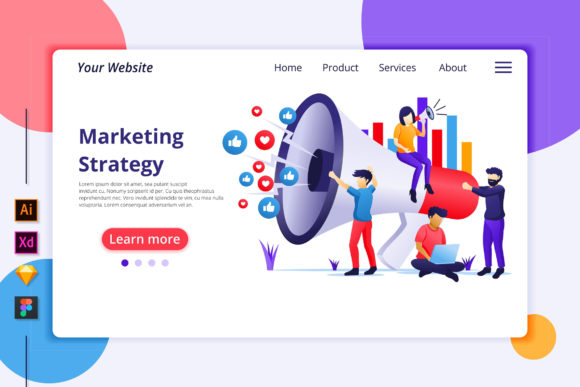
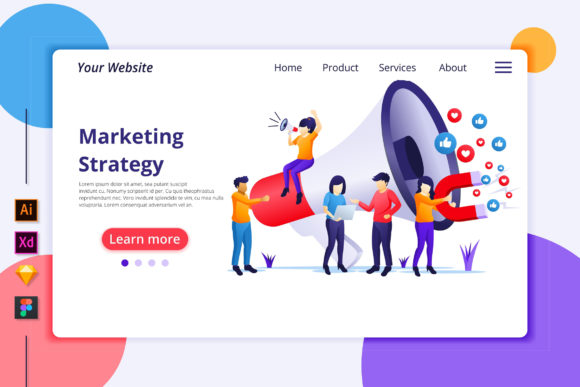
Nonprofits and advocacy groups also benefit from well-designed landing pages. A campaign aimed at raising funds for a cause could use a landing page to share stories, show impact metrics, and provide a secure donation portal. The visual elements, such as a giant megaphone illustration, can help convey the message more effectively.
Who Benefits From a Marketing Strategy Campaign Landing Page?
Entrepreneurs and small business owners often use landing pages to test new ideas or promote new services. For them, a landing page is a cost-effective way to gather feedback, build an audience, and generate initial sales without the need for a full website.
Large corporations may use landing pages for targeted campaigns, such as launching a new product in a specific region. These pages allow for precise control over messaging and audience targeting, ensuring that the right people see the right content at the right time.
Marketers and designers also benefit from using landing pages. They can experiment with different layouts, copy, and visuals to determine what works best for their audience. A flat design concept with editable elements makes it easier to iterate and refine the page over time.
Scenarios Where a Marketing Strategy Campaign Landing Page Is Useful
Consider a scenario where a fitness brand wants to promote a new workout program. A landing page could be created with a hero image featuring a person holding a giant megaphone, shouting about the benefits of the program. The page would include a brief description, a video demo, and a sign-up form for the program.
Another example is a tech startup launching a new app. The landing page could showcase the app's unique features, user testimonials, and a download link. A clean, modern design with vector illustrations ensures that the page looks professional on any device.
For a local event like a music festival, a landing page could serve as a registration hub. It might include a countdown timer, a schedule of events, and a ticket purchase option. Using a flat design concept allows for easy customization and scalability across different platforms.
Key Considerations Before Creating a Marketing Strategy Campaign Landing Page
Before building a landing page, it's important to define the campaign's goal. Is the objective to increase sales, generate leads, or raise awareness? The answer will shape the content, design, and functionality of the page.
Understanding the target audience is equally crucial. What are their pain points, preferences, and behaviors? Tailoring the message to resonate with this group increases the chances of conversion.
Testing and optimization should also be part of the process. A/B testing different headlines, images, and calls to action can reveal what works best. Tools like Google Analytics can track performance and guide improvements.
Strengths and Limitations of a Marketing Strategy Campaign Landing Page
One of the main strengths of a landing page is its focus. By eliminating distractions and keeping the message clear, it can significantly improve conversion rates. Additionally, landing pages are easy to update and adapt to changing needs, making them a flexible marketing tool.
However, there are limitations. If the page is not well-designed or the messaging is unclear, visitors may leave without taking action. Poor mobile optimization can also hurt performance, as many users access content via smartphones.
Another consideration is the need for consistent branding. A landing page should reflect the overall look and feel of the company to maintain trust and recognition. This includes using the same colors, fonts, and tone of voice.
Choosing the Right Design for Your Marketing Strategy Campaign Landing Page
When selecting a design, consider the purpose of the campaign and the preferences of the target audience. A flat design concept offers a clean, modern aesthetic that is easy to navigate and visually appealing. Vector illustrations, such as a person holding a giant megaphone, can add a dynamic element that captures attention.
Editable elements are essential for flexibility. Being able to resize and customize the design without losing quality allows for quick adjustments and better alignment with campaign goals. This is especially useful when working with multiple platforms or updating content frequently.
Accessibility is another factor to keep in mind. Ensure that the design is usable for all visitors, including those with disabilities. This includes proper contrast ratios, alt text for images, and keyboard navigation support.